
BATTERY CARE
Battery Testing vs. Just Checking Voltage
Many drivers think a quick voltage check tells the full story. However, proper testing goes much deeper.
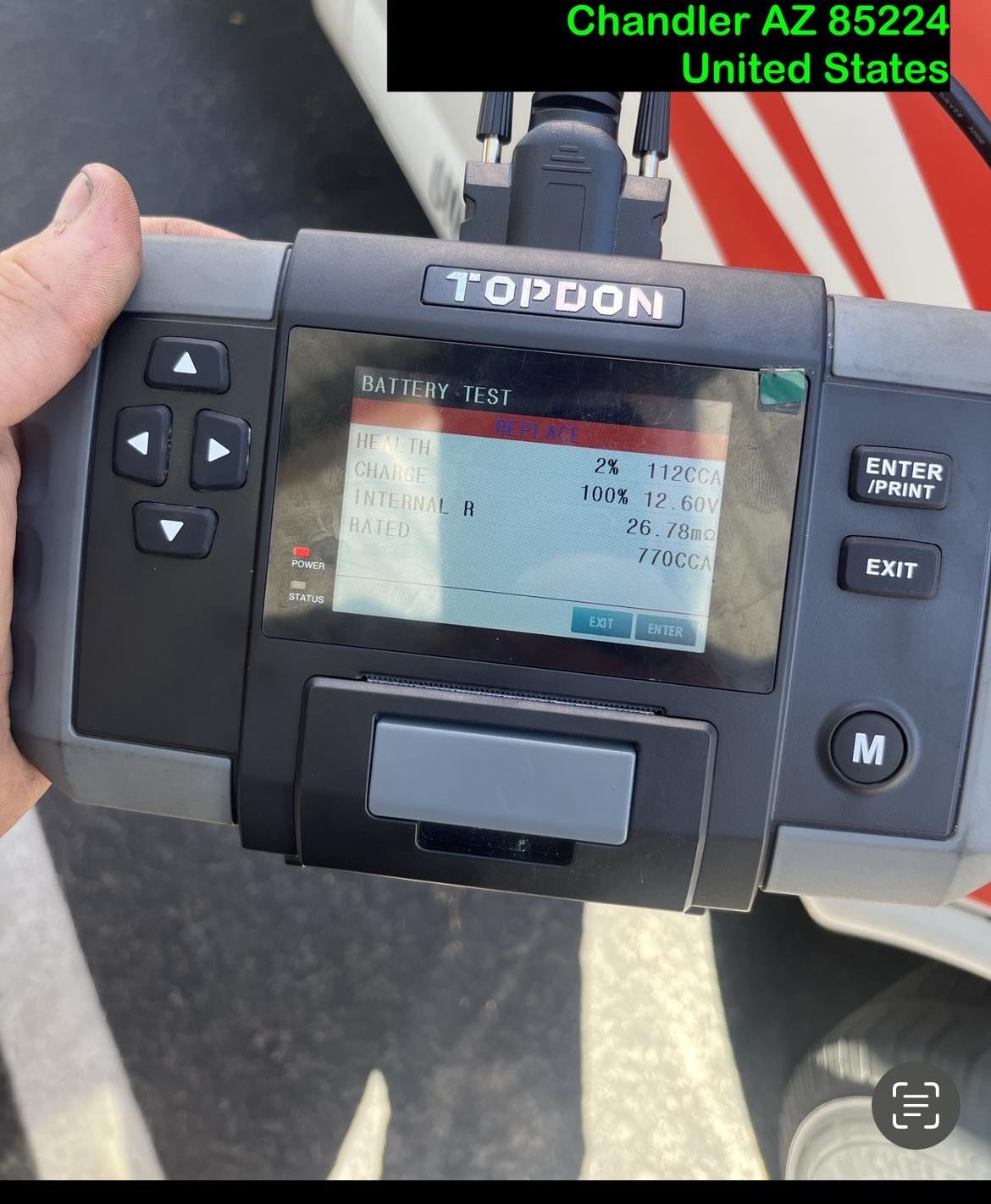
Battery testing vs checking voltage is a common misunderstanding. Although voltage readings provide basic information, they do not reveal the battery's true ability to perform under load.
What Checking Voltage Actually Tells You
A simple voltage check measures the battery's resting charge level. For example, a fully charged battery typically reads around 12.6 volts. However, that number only shows surface charge—not internal strength.
Why Voltage Alone Can Be Misleading
A battery can show proper voltage yet still fail when starting the engine. That's because starting requires high amperage output, not just stored voltage. Therefore, a battery may look fine on a meter but struggle under real-world conditions.
Important: Many batteries that \"test good\" by voltage alone fail days or weeks later.
What Proper Battery Testing Measures
Professional battery testing applies a load and evaluates cold cranking amps (CCA). In other words, it measures whether the battery can deliver power when the engine demands it.
- Cold cranking amp performance
- Internal resistance
- Charging system output
- Voltage stability under load
Why This Matters in Arizona
Arizona heat accelerates internal battery wear. As a result, batteries often degrade internally before voltage readings drop. To understand heat damage, review our guide on Arizona heat car batteries.
When Should You Replace Instead of Re-Test?
If your battery is over 2–3 years old and shows weak CCA results, proactive replacement is usually smarter than waiting for failure. Consider scheduling a car battery replacement before peak summer temperatures.
What To Do If the Vehicle Won't Start
If you're stuck with a no-start condition, begin with a jump start. However, repeated no-start situations usually indicate a failing battery. For urgent situations, use emergency roadside assistance.
Need Roadside Help?
Not sure if your battery needs testing or replacement? We check both on-site. Call 480-256-8516, Monday–Sunday: 7:00 AM – 8:00 PM.